Entrepreneurs Treat European Residency as a Business Tool
- 1 day ago
- 2 min read
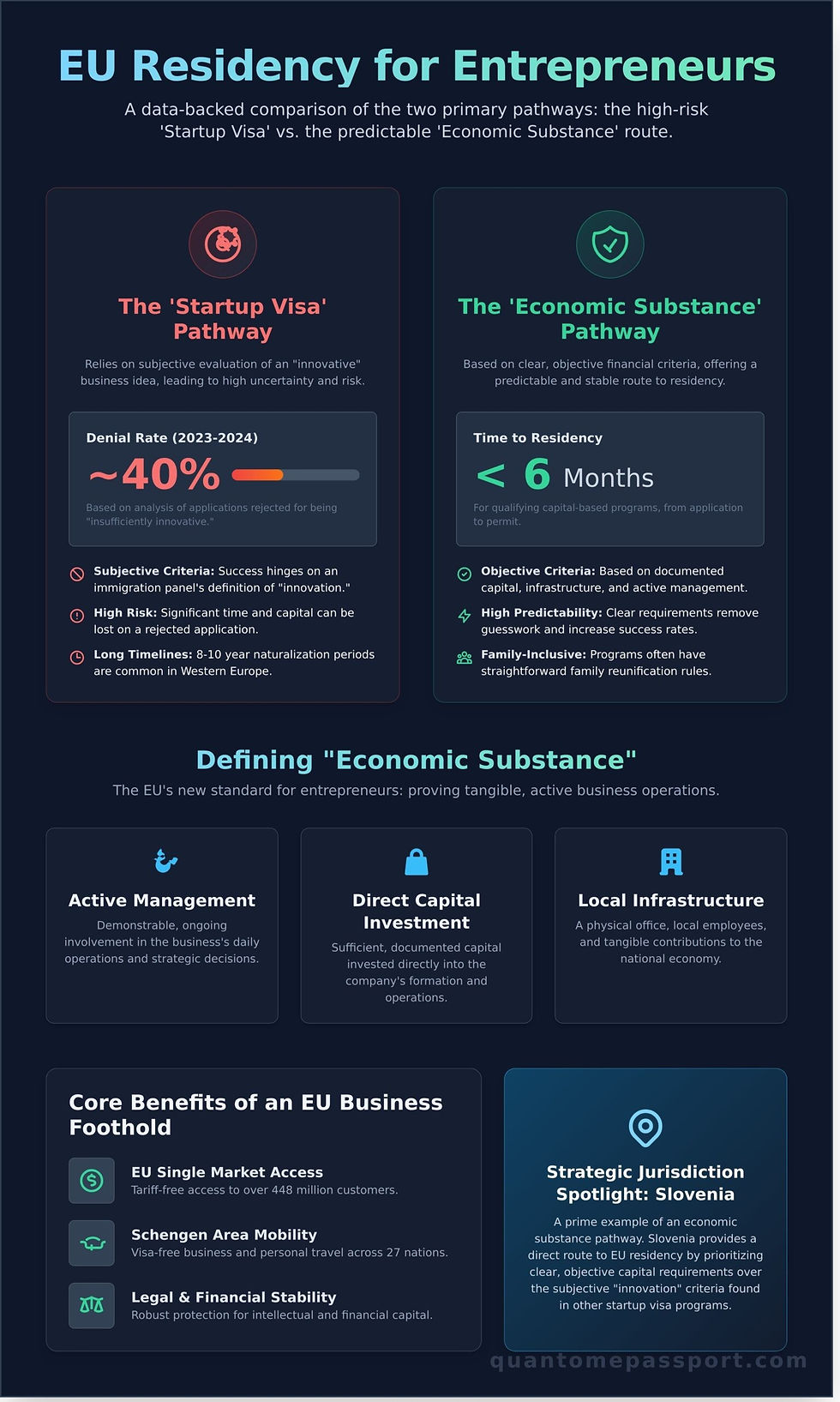
Subheadline: Founders are increasingly viewing legal residency in Europe as a way to reduce operational risk, speed market entry and protect family wealth.
European residency programs have moved from lifestyle perks to strategic business decisions for many company builders. With roughly 450 million residents and an economy valued at about €17 trillion, the European bloc offers a dense customer base and mature financial systems that founders say make a clear case for establishing a local foothold. Faced with tighter cross-border finance rules and unpredictable travel curbs, a rising number of entrepreneurs now factor mobility into corporate planning, not just personal convenience.
Founders describe passports and permits as part of their operational toolkit. When governments impose sanctions, tighten banking checks or change immigration rules, businesses that once assumed frictionless movement find themselves negotiating new barriers. “For a lot of my clients, a second residency isn’t luxury — it’s contingency,” says Adrián Ruiz, an immigration adviser who works with tech founders. Many entrepreneurs compare mobility planning to hedging: they spread legal ties across jurisdictions the way they diversify suppliers or investments.
Several EU states introduced investor-linked residency pathways in the last decade, though many of those schemes have been revised. Entrepreneurs attracted by these options typically seek long-term legal residence more than immediate nationality; the ability to open local accounts, sign leases, and hire staff without repeated visa hurdles often matters more than the travel document itself. Establishing a base inside Europe can simplify compliance with regional rules, ease recruitment of specialized workers and accelerate access to partner networks and lenders.
Physical presence still carries weight in sectors where reputation and regulatory familiarity matter. Startups in biotech, finance and regulated services report that having a legal foothold in Europe eases dealmaking and reduces friction when entering procurement processes. One founder who relocated part of his team to a southern European city described the change as “less paperwork, more conversations,” noting that local registration made banks and customers take the business more seriously.
The calculus often shifts after an exit or a period of rapid growth. Once liquidity events occur, priorities broaden to include wealth preservation, schooling for children, health-care access and succession planning. Mobility options become one piece of a larger family-office discussion: where to base operations, how to pass assets to the next generation, and which jurisdictions offer the legal protections entrepreneurs want. Advisors say these considerations are pushing mobility up the list of long-term planning items for roughly half of high-growth founders they counsel.
Not everyone welcomes the trend. Critics warn that market-driven residency schemes can erode the connection between citizenship and civic belonging, while defenders argue nations have long used visas and tax incentives to attract talent and capital. Policy-makers now face competing goals: encouraging investment without undermining social cohesion. Analysts predict the debate will continue as more business owners treat cross-border legal status as a practical tool for scaling and safeguarding their companies.



Comments