Microsoft Debuts Cybersecurity-Focused AI Model and Agent Platform for Enterprise Defenders
- Andrej Botka
- 15 hours ago
- 2 min read

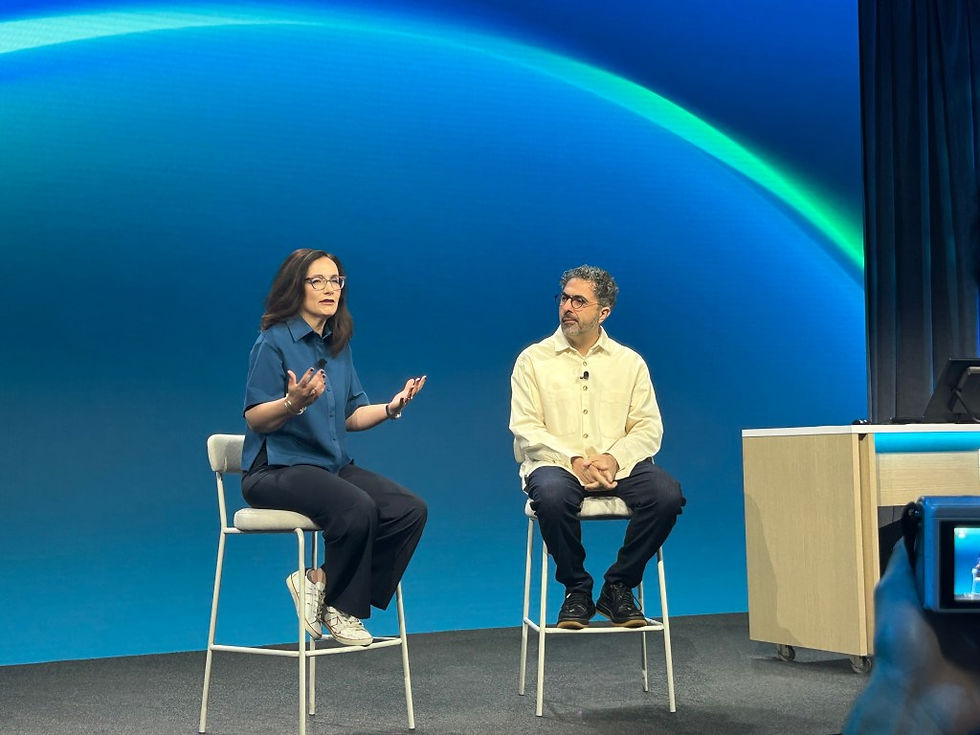
Microsoft on Monday unveiled a new lineup aimed squarely at corporate security teams: MAI-Cyber-1-Flash, the company’s first AI model tailored for finding flaws in complex code, and Perception, a platform that dispatches automated agent teams to run and remediate security workflows. The announcements were made at a small event in San Francisco as Microsoft sought to close ground with rival offerings from Anthropic, Google and OpenAI.
The software maker said MAI-Cyber-1-Flash was trained to hunt down tricky vulnerabilities and to power MDASH, the company’s vulnerability-detection and remediation harness. Microsoft presented benchmark results showing the model outperforming four competing systems on the industry standard "Cyber Gym" test, and said the approach also reduces operational costs. Microsoft’s AI chief framed the release as a production-ready capability built into its development toolchain.
Perception is designed to operate with three kinds of automated teams. The so-called red agents simulate likely intrusion scenarios and map which weaknesses an attacker might try to exploit. Blue agents focus on spotting and prioritizing live bugs, while green agents carry out corrective measures. Microsoft says the agents can be chained with MDASH so discovery, detection, triage and code fixes flow from a single platform.
Engineers working on Perception described the suite as a time-saver for security groups that today rely on many specialists to find and repair defects. One senior Microsoft engineer said the system can compress days of manual investigation into a matter of minutes, and can automatically generate remediation patches alongside detection rules and posture recommendations. The company also emphasized integration points with existing enterprise toolsets.
The move comes as defenders and attackers alike are experimenting with AI tools. Microsoft plans to make Perception available for preview on Nov. 3, positioning it into an already busy market: Anthropic released its Mythos security work earlier this year to select partners, and OpenAI has rolled out its own enterprise security offering. Observers said the new products underscore a widening competition to apply AI to both offense and defense in cyber operations.
Independent security researchers welcomed the focus but urged caution. One analyst noted that automation can help teams cope with scale, yet warned that improper tuning can produce false positives or dangerous overconfidence. For many organizations, the choice will be whether to adopt a boxed AI platform like Perception or to stitch together specialist tools themselves as threat actors increasingly leverage machine learning.

Comments