Watch The Words: How Job Descriptions Can Reveal A Toxic Workplace
- Andrej Botka
- 14 minutes ago
- 2 min read

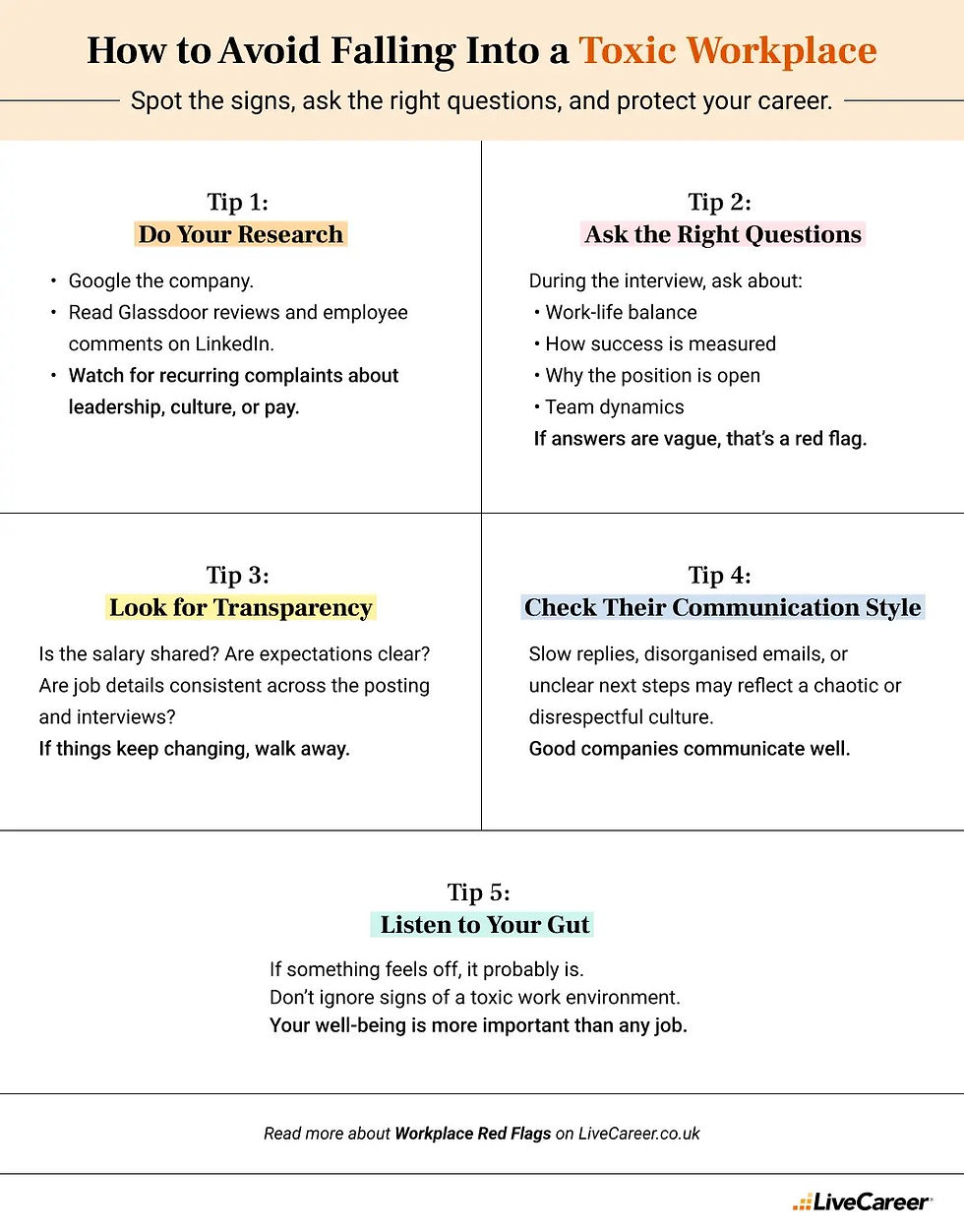
Many hiring pitches sound appealing on the surface, but the language companies use can be a quick way to gauge what daily life there will really look like. Subhead: Job seekers and current employees should probe beyond buzzwords — promises of advancement or tough-talk requirements often mask unclear expectations and problematic management practices.
When employers promise career growth, ask for specifics. Vague claims of "more responsibility" or a fancier title mean little unless accompanied by concrete examples: who moved up, what training was provided, and how pay changed with new duties. Candidates should request timelines, mentorship plans and typical compensation ranges. Growth ought to translate into clearer roles and better pay, not just a heavier inbox.
Phrases that suggest people need to be emotionally hardened are another red flag. Expecting staff to shrug off abrasive behavior or public criticism signals a workplace that tolerates disrespect. Research and practitioners agree that people produce more when they feel safe to speak up. Instead of treating bluntness as a hiring filter, companies should coach managers to deliver feedback with empathy and context.
Changing a company’s vocabulary won’t fix deeper problems. Surface edits — swapping one slogan for another — only delay the point at which new hires discover unwritten rules. If leaders still reward around-the-clock availability or punish mistakes harshly, nicer language in a job post won’t stop turnover. Organizations need to align daily practices, performance metrics and reward systems with the commitments they advertise.
Practical steps are simple but often overlooked: map promotion paths with examples, set clear learning and compensation benchmarks, and invest in manager training that emphasizes respectful communication. "If you can’t show how people actually progress here, don’t expect candidates to take vague promises at face value," says a senior career coach who works with tech executives. Holding leaders accountable for how they behave matters as much as wording in postings.
For anyone interviewing or hiring, be direct. Ask for past examples of internal mobility, the support employees receive when they take on new tasks, and how feedback is typically given. If answers are evasive or habitually peppered with macho-sounding demands, consider that a signal to keep looking or to push for change inside the company.


Comments