Amazon’s Bee Wrist Device Proves Handy For Meetings, Raises Fresh Privacy Questions
- Andrej Botka
- 12 hours ago
- 3 min read

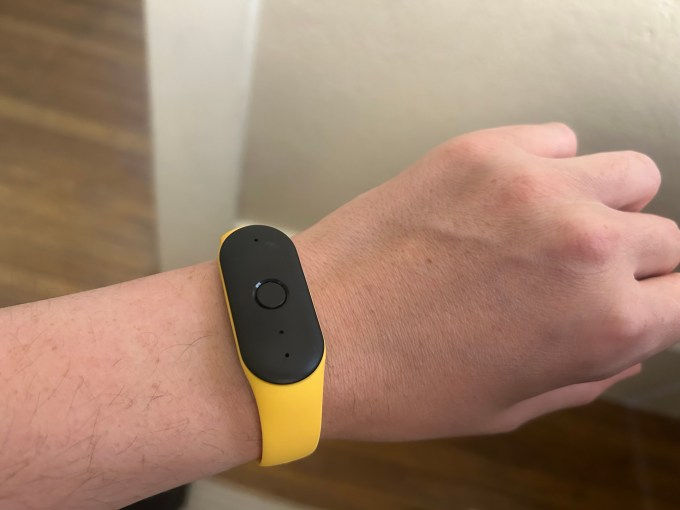
I spent several days wearing Bee, the wristbound assistant Amazon picked up last year, to see whether the promise of always-on note-taking holds up in real life. The short version: it can be a helpful aide for people who move between calls and face-to-face appointments, but it asks for deep access to your phone and life — and that will turn some people off. After trying it in professional and casual settings, I found the summaries useful but the raw transcripts uneven, and the data-handling model causes real unease for privacy-minded users.
Getting Bee running is straightforward: you power the unit, pair it with the companion app and supply basic profile data. A hardware button toggles audio capture; an illuminated green indicator shows when the device is actively recording. Once a conversation is logged, the mobile application generates a condensed recap and a full verbatim record. Those condensed notes are the clearest part of the experience, letting you skim what was said without replaying the whole audio, which is especially convenient after dense meetings.
In a work call where all parties agreed to recording, Bee produced a polished summary that split the discussion into digestible segments and highlighted action items. That convenience is familiar territory for professionals: transcription and automated summaries are available from several established services. Where Bee departs from competitors is the always-worn form factor and the promise of continuous, daylong capture. Still, the full transcripts can be messy. The device sometimes fails to attach speaker labels unless you add names manually, and I noticed small gaps in what it recorded — nothing that undermined the main points, but enough to require cross-checking with the audio.
I also tested Bee in a social setting, leaving it active during a friends’ film night. The device recognized the context and tagged the session as a movie discussion rather than treating snippets of dialog as literal events, which was a relief. But that episode underscored the tension at the heart of the product: it’s being positioned for everyday personal use, yet it needs broad permissions — access to location, photos, contacts, calendar entries and notifications — to operate at its most useful. Users may also opt to feed it biometric data like sleep and heart-rate information. All of that material is kept in the cloud by default, and while the company says it encrypts data both during transfer and when stored, reliance on remote servers raises familiar concerns.
There are signs the company is testing other architectures. A recent online demo by a prominent tech creator showed Bee running tasks locally on the device, a configuration that would reduce cloud dependency and appeal to privacy advocates. Amazon hasn’t announced a consumer-ready version that operates entirely offline. Independent security specialists I spoke with said on-device processing would be a meaningful improvement but warned it is technically demanding and often comes with trade-offs in speed and capability. Legal experts also pointed out that recording laws vary by jurisdiction; carrying an always-on recorder places responsibility on the wearer to secure consent where required.
For now, Bee is most convincing as a workplace tool for people who spend long stretches in meetings and need a reliable way to capture decisions and follow-ups. It trims the overhead of note-taking and makes it easier to revisit conversations without replaying hours of audio. But for everyday life — family dinners, private conversations, nights out — many will find its reach too broad. Prospective buyers should weigh the convenience of automated summaries against the need to grant wide-ranging permissions and to trust a cloud-backed storage model.


Comments