Robotaxi Rollout Hits Weather, Construction Snags; Musk’s Web Of Corporate Deals Comes Into View
- Andrej Botka
- 12 hours ago
- 3 min read

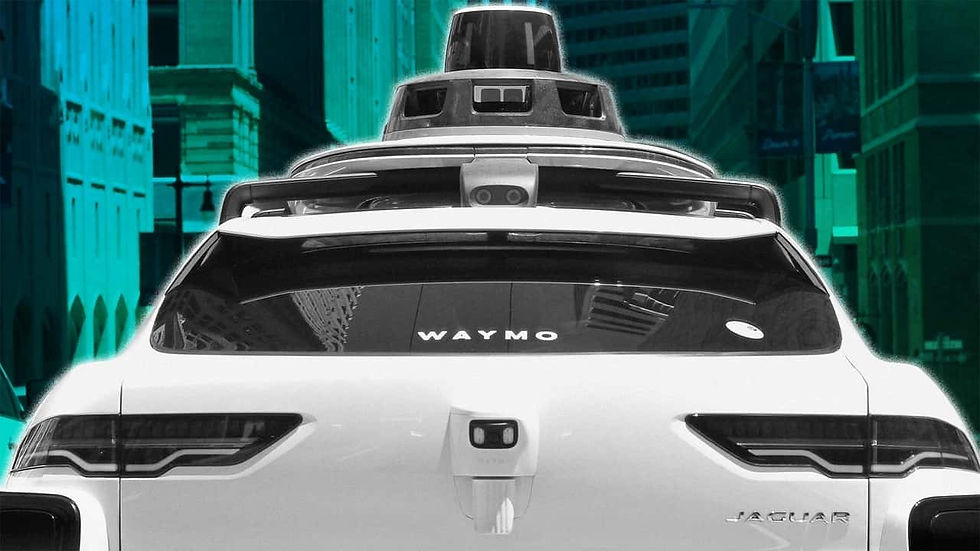
San Francisco residents may see autonomous cabs on the street, but riders and regulators are learning those vehicles still have limits. Waymo has suspended services in several metro areas — including Atlanta, Dallas, Houston and San Antonio — after its fleet repeatedly struggled with heavy rain and flooded roadways, and the suspensions have since been extended to Austin and Nashville. The company also temporarily stopped freeway trips in four large U.S. markets as it works to refine behavior around highway construction. The disruptions prompted a recent recall and underscore that commercial deployment is only one step in a much longer refinement process.
Engineers say the thorny problem is not just sensing standing water but deciding when it is safe to proceed. That kind of judgment, especially during storms or in work zones, remains an operational headache for automated systems. “Every expansion uncovers a new set of real-world variables,” said Dr. Laura Chen, a transportation researcher at UC Berkeley, noting that incidents rooted in weather and temporary roadway layouts are predictable but hard to eliminate. For consumers, that means robotaxi service today is usually available under constrained conditions rather than as an everyday substitute for a human-driven ride.
Meanwhile, the SpaceX initial public offering filing has peeled back more details about how Elon Musk’s companies trade goods and services. The documents show SpaceX purchased $506 million of Tesla Megapack energy storage in 2025 — almost three times the prior year’s volume — and bought about $131 million worth of Cybertrucks. The filing also records modest transactions between Musk-affiliated firms: $1 million paid to The Boring Company for tunnel work in Bastrop, Texas, and roughly $1 million paid by X for leased space from the same contractor. After last year’s acquisition of xAI, some earlier Tesla investments were converted into an equity stake in SpaceX, and the filing highlights two ambitious joint projects on the horizon: a chip-manufacturing plant called Terafab and an AI platform dubbed Macrohard. Ethan Brooks, a corporate finance professor, warned that tighter operational ties can complicate governance and raise scrutiny when public investors are involved.
Investors continue to back mobility startups even as incumbents wrestle with these technical challenges. Southern California’s Aboard raised $13 million in a pre-Series A round for extended-range electric travel trailers, while Arlington-based Quartermaster secured $43 million to build a distributed sensing network for ships. Indian travel-fintech Scapia landed $63 million led by General Catalyst. In strategic moves, autonomous-vehicle developer May Mobility struck an agreement with Chinese-backed Ecarx to source thousands of purpose-built robotaxi units in a program valued at about $750 million over its duration, with initial deployments planned through a third party starting next year and commercialization aimed for 2028. Uber also boosted its stake in Delivery Hero to nearly one-fifth, signaling continued consolidation in delivery services.
Other industry shifts and reading suggestions: MIT researcher Bryan Reimer presented on the human factors that will shape AI adoption; analysts continue to describe the global electric-vehicle market as diverging, with the U.S. lagging in some segments. Lyft argued that any future mobility network will need both human drivers and automated vehicles, a stance that reflects political and labor realities. Startups and OEM partnerships keep moving: Nuro named Michael Mancini as CFO; Stellantis tapped Wayve for hands-free driving features slated for 2028 and rolled out a $70 billion plan that includes more than a dozen North American models. Tesla’s supervised Full Self-Driving package recently became available in Lithuania, the second European country to allow it, an important step given one of CEO Elon Musk’s long-term targets requires 10 million active FSD subscriptions by 2035. A San Francisco physician who had sued an AV company over a mistaken identity check has dropped the case after the issue was fixed.
On the consumer side, I spent time behind the wheel of the 2026 Nissan Leaf Platinum+, a top-trim model with an as-tested price of $42,635 including destination and some add-ons. That’s up from the roughly $37,815 total for the 2024 Leaf SV Plus I drove two years ago. The new Leaf’s cabin feels lighter and more contemporary, and the EPA-estimated range is about 259 miles for this version, with higher-range variants topping 300 miles. Tech upgrades that were missing before are now standard on many trims: a 360-degree camera, wireless smartphone integration and adaptive cruise control, along with a curved 14.3-inch central display and a heads-up unit on the top spec models. For buyers weighing range, price and everyday tech, the latest Leaf is a clear step up.


Comments